What Are Hazardous Waste HP Codes?
HP codes — Hazardous Property codes — are the classification system used across the UK and EU to identify what makes a waste hazardous. When a waste stream contains substances that could harm people or the environment, an HP code is assigned to describe the specific hazard it poses.
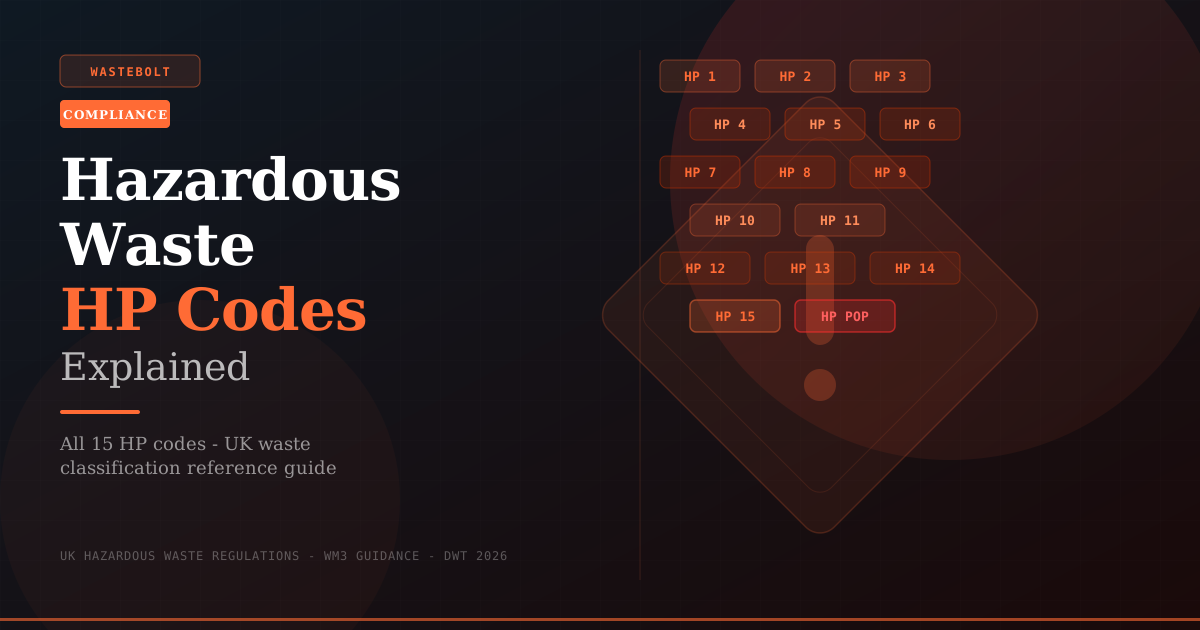
There are 15 HP codes in total (HP 1 through HP 15), plus a special code HP POP for waste containing Persistent Organic Pollutants at concentrations exceeding legal limits. Each code describes a different category of hazard — from explosive to carcinogenic to ecotoxic.
Understanding HP codes is essential for anyone completing a Hazardous Waste Consignment Note, classifying waste under the UK Waste Classification Technical Guidance (WM3), or submitting data to the Digital Waste Tracking platform from October 2026.
Tip: Use our free Hazardous Waste HP Codes reference tool to search all 16 HP codes (HP1–HP15 and HP_POP) with descriptions.
Why HP Codes Matter
Waste is classified as hazardous when it contains substances that exhibit one or more of the hazardous properties described by the HP codes. The classification determines:
- Whether a Hazardous Waste Consignment Note is required rather than a standard Waste Transfer Note
- Which disposal or recovery routes are legally available
- What carrier licence is required to transport the waste
- What consignee permit is needed to accept the waste
- How the waste must be packaged, labelled, and documented in transit
Misclassifying hazardous waste as non-hazardous — or failing to identify the correct HP codes on a consignment note — is a compliance offence that can result in fixed penalty notices or prosecution.
The Complete List of HP Codes
HP 1 — Explosive
Waste that can cause dangerous chemical reactions, producing gas that can damage surroundings. This includes pyrotechnic waste, self-reactive substances, and organic peroxides that are thermally unstable.
Common examples: Old ammunition, certain industrial explosives, self-reactive chemicals from manufacturing processes.
HP 2 — Oxidising
Waste that can provide oxygen and cause or contribute to the combustion of other materials, even in the absence of air.
Common examples: Peroxide-containing waste, nitrate salts, certain chlorine-based cleaning agents and bleaches at high concentrations.
HP 3 — Flammable
Waste that is easily ignited. HP 3 covers several sub-categories:
- Flammable liquids with a flashpoint below 60°C
- Flammable gases
- Flammable solids that ignite through friction
- Self-reactive substances that generate heat spontaneously
- Pyrophoric waste that ignites on contact with air
- Self-heating waste
- Waste that emits flammable gases on contact with water
Common examples: Waste solvents, waste petrol, oil-contaminated rags, certain paints and varnishes.
HP 4 — Irritant
Waste that can cause skin irritation, eye damage (category 2), or respiratory tract irritation upon contact or exposure.
Common examples: Dilute acids and alkalis below HP 8 threshold, certain detergent waste, some pesticide residues.
HP 5 — Specific Target Organ Toxicity / Aspiration Toxicity
Waste that causes damage to specific organs through single or repeated exposure. Also covers aspiration toxicity — liquids that cause chemical pneumonia if inhaled into the lungs.
Common examples: Waste containing petroleum hydrocarbons, chlorinated solvents, certain heavy metals at threshold concentrations.
HP 6 — Acute Toxicity
Waste that can cause severe health effects — including death — through a single exposure by ingestion, skin contact, or inhalation.
Common examples: Cyanide-containing waste, arsenic compounds, concentrated pesticide residues, certain industrial process waste containing Category 1, 2, or 3 acute toxins.
HP 7 — Carcinogenic
Waste that contains substances known or presumed to cause cancer in humans.
Common examples: Asbestos-containing waste (the most common carcinogenic hazardous waste in the UK construction sector), waste containing benzene, polycyclic aromatic hydrocarbons (PAHs), certain chromium compounds.
HP 8 — Corrosive
Waste that can cause severe skin corrosion (Category 1) upon contact — destroying skin tissue within a defined exposure period.
Common examples: Concentrated sulphuric acid waste, hydrochloric acid residues, caustic soda solutions above threshold concentrations, certain battery acid waste.
HP 9 — Infectious
Waste containing viable microorganisms or their toxins that are known or reliably believed to cause disease in humans or other living organisms.
Common examples: Clinical waste from healthcare settings, laboratory cultures, microbiological waste, certain food processing waste where pathogenic contamination is present.
HP 10 — Toxic for Reproduction
Waste that can negatively affect sexual function and fertility in adults, or cause developmental toxicity in offspring.
Common examples: Waste containing certain phthalates (plasticisers), lead compounds, certain solvents including toluene at threshold concentrations.
HP 11 — Mutagenic
Waste that can cause permanent changes in the genetic material (DNA) of cells. Mutagenic substances can contribute to cancer development and heritable genetic disorders.
Common examples: Waste containing ethylene oxide, certain acrylamide residues, radiation-contaminated waste, some heavy metal compounds.
HP 12 — Produces Toxic Gases in Contact with Water, Air or Acid
Waste that releases toxic or very toxic gases when it comes into contact with water or acids.
Common examples: Waste cyanide salts, certain sulphide-containing waste, calcium carbide waste, some metal treatment process residues.
Practical note: This is one of the most important HP codes for waste handlers to understand. Mixing certain wastes with water during handling or storage can create immediately dangerous concentrations of hydrogen cyanide, hydrogen sulphide, or other toxic gases.
HP 13 — Sensitising
Waste containing substances that can cause an allergic reaction — either skin sensitisation or respiratory sensitisation — in people who are repeatedly exposed.
Common examples: Waste containing isocyanates (from polyurethane production), certain epoxy resin residues, some chromium compounds, formaldehyde-containing waste.
HP 14 — Ecotoxic
Waste that poses risks to the environment through bioaccumulation and/or toxic effects on living organisms. HP 14 specifically addresses hazards to the aquatic environment and soil organisms.
Common examples: Waste containing organotin compounds, certain heavy metals above threshold concentrations, some pesticide residues, PFAS (per- and polyfluoroalkyl substances) at threshold concentrations.
HP 15 — Capable of Exhibiting a Hazardous Property Not Directly Displayed by the Original Waste
HP 15 is a catch-all for waste that, once disposed of, could exhibit any of the other hazardous properties (HP 1 to HP 14) even if those properties are not present in the original waste.
This typically applies to waste that could leach hazardous substances once landfilled, or waste that could decompose to produce hazardous compounds under disposal conditions.
Common examples: Certain contaminated soils that could leach heavy metals under landfill conditions, some mixed industrial waste.
HP POP — Contains Persistent Organic Pollutants Above Legal Limits
HP POP is a special classification for waste containing regulated Persistent Organic Pollutants (POPs) at concentrations exceeding the limits set in Annex IV of the UK POPs Regulation. Waste classified as HP POP is treated as hazardous regardless of its other properties.
Importantly, POPs can be present in both hazardous and non-hazardous waste. A waste stream that would otherwise be non-hazardous may require a Hazardous Waste Consignment Note and HP POP designation if it contains POPs above the threshold concentrations.
Common examples: Old electrical transformers containing PCBs, certain contaminated soils near former industrial sites, treated timber containing lindane or other organochlorine compounds.
HP Codes and the Waste Classification Process
HP codes are determined through the UK Waste Classification Technical Guidance (WM3). The process involves:
- Identify the waste composition — what substances does the waste contain and at what concentrations?
- Check each substance against the list of hazardous substances in WM3 and the relevant EU regulations
- Apply the concentration thresholds — each HP code has specific concentration cut-off values; a waste is only classified as hazardous under a particular HP code if the relevant substances exceed those thresholds
- Assign the HP codes — a single waste can exhibit multiple HP properties simultaneously
- Record on the consignment note — all applicable HP codes must be stated on the Hazardous Waste Consignment Note
HP Codes on Hazardous Waste Consignment Notes
A Hazardous Waste Consignment Note must include the HP codes that apply to the waste being transferred. Unlike a standard Waste Transfer Note, consignment notes require significantly more detail about the waste's hazardous properties.
The consignment note must also include:
- The EWC code marked with an asterisk (*) in the UK Waste Classification system
- The physical and chemical characteristics of the waste
- For wastes containing POPs — specific identification of the POPs present and their concentrations
HP Codes and Digital Waste Tracking 2026
From October 2026, Digital Waste Tracking (DWT) becomes mandatory across England, Wales and Northern Ireland for all permitted waste receiving sites. The DWT system requires HP codes to be submitted digitally as part of hazardous waste movement records.
The Defra DWT API includes specific fields for:
- Multiple hazardous components (HP codes and chemical/biological component details)
- POPs declarations with substance name and concentration
- Consignment note codes for hazardous movements
Businesses currently recording HP codes on paper consignment notes will need a digital system capable of capturing and transmitting this data to the EA's platform. Wastebolt connects directly to the DWT API and supports full hazardous waste documentation including all HP code classifications.
Start a free trial — no credit card required.
Quick Reference — All HP Codes
| Code | Name | Key Hazard |
|---|---|---|
| HP 1 | Explosive | Dangerous chemical reactions producing gas |
| HP 2 | Oxidising | Causes or contributes to combustion of other materials |
| HP 3 | Flammable | Easily ignited — liquids, gases, solids, self-reactive |
| HP 4 | Irritant | Skin, eye, or respiratory irritation |
| HP 5 | STOT / Aspiration Toxicity | Organ damage through repeated exposure |
| HP 6 | Acute Toxicity | Severe health effects from single exposure |
| HP 7 | Carcinogenic | Causes or contributes to cancer |
| HP 8 | Corrosive | Destroys skin tissue on contact |
| HP 9 | Infectious | Contains pathogens causing disease |
| HP 10 | Toxic for Reproduction | Harms fertility or offspring development |
| HP 11 | Mutagenic | Causes permanent genetic changes |
| HP 12 | Releases Toxic Gases | Toxic gases produced with water/air/acid |
| HP 13 | Sensitising | Causes allergic skin or respiratory reactions |
| HP 14 | Ecotoxic | Toxic to aquatic life and soil organisms |
| HP 15 | Latent Hazard | Could exhibit hazardous properties after disposal |
| HP POP | POPs Above Limits | Contains regulated POPs above Annex IV thresholds |
Frequently Asked Questions
Does a waste need to have all HP codes identified before it can be moved? Yes. A Hazardous Waste Consignment Note must include all applicable HP codes. Where the composition of the waste is uncertain, laboratory testing or reference to the WM3 guidance is required before transfer.
Can a waste have more than one HP code? Yes — many hazardous waste streams exhibit multiple hazardous properties simultaneously. All applicable HP codes must be recorded on the consignment note.
Is HP POP the same as HP 14 (Ecotoxic)? No. HP POP and HP 14 are separate classifications. HP 14 covers general ecotoxicity to aquatic environments and soil. HP POP specifically applies to waste where regulated POPs exceed the threshold concentrations set in Annex IV of the UK POPs Regulation. A waste can be HP POP without being HP 14, and vice versa.
What is WM3? WM3 is the UK Waste Classification Technical Guidance, published by the Environment Agency. It provides the methodology for classifying waste as hazardous or non-hazardous, including the concentration thresholds for each HP code. It is the definitive reference for waste classification in England and Wales.
Do HP codes apply in Scotland and Northern Ireland? Yes. The same HP code system applies across all four UK nations, though the regulatory framework is administered by SEPA in Scotland, NIEA in Northern Ireland, and NRW in Wales.
Last updated: May 2026. For the most current HP code thresholds and classification guidance, refer to the UK Waste Classification Technical Guidance (WM3) published by the Environment Agency.